
University of Texas at San Antonio Counseling Programs
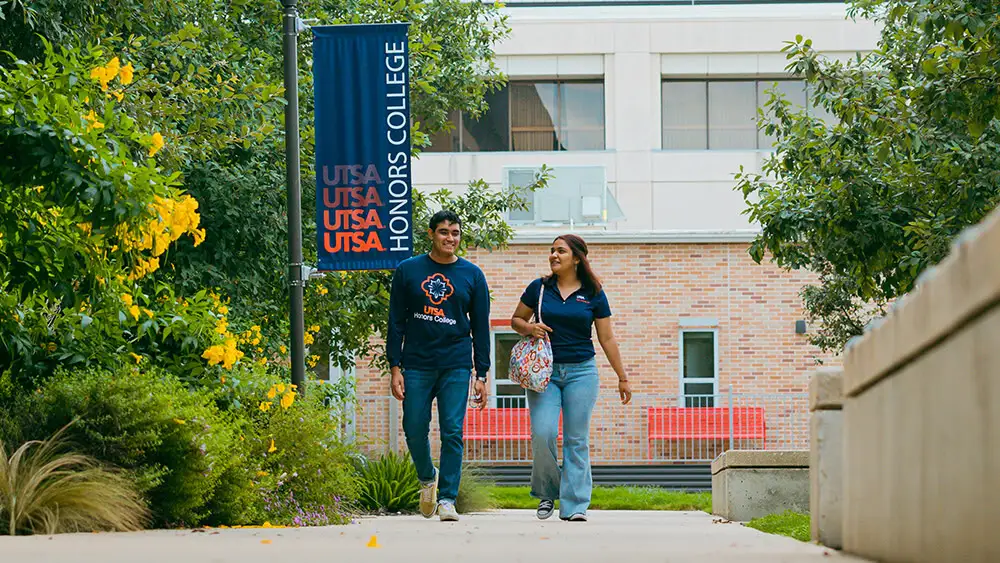
The Department of Counseling at the University of Texas at San Antonio prepares students to become compassionate, innovative leaders who reshape lives and communities. The department’s state-of-the-art teaching, meaningful research, and strong community involvement enable students to address evolving needs of global communities with integrity and purpose.
The department’s programs have earned national accreditation through the Council for Accreditation of Counseling and Related Educational Programs (CACREP) until 2033. This recognition shows their excellence in counseling education, clinical service, and scholarship. Students graduating from these programs receive education that meets strict national standards.
Students can choose from several academic paths, including the Master of Science in Clinical Mental Health Counseling, Master of Education in School Counseling, and Doctor of Philosophy in Counselor Education and Supervision. Graduate Certificates in Bilingual Counseling and Integrated Behavioral Healthcare are also available. The department helps students get their Certification in the State of Texas through the School Counseling Certification Program.
Faculty members who lead the counseling field locally, nationally, and internationally guide students throughout their journey. Their connections create excellent mentorship and professional growth opportunities. The doctoral program shows strong results with 66 graduates since Fall 2007. Among these graduates, 59% now hold academic positions from assistant professor to dean at universities and colleges, while 30% work in private or group practice.
The College of Education and Human Development (COEHD) houses the Department of Counseling and prepares educators and professionals through fieldwork, internship, practicum, service-learning, and clinical teaching. The college strives to become an international model that develops inclusive, transformative leaders guided by community, integrity, excellence, scholarship, and service principles.
Programs emphasize creativity, diversity, developmental and relational processes, ethics, and professional identity. Students learn essential competencies to work effectively in multicultural and cross-national settings. Graduates emerge ready to influence human and community potential through leadership in education, health and wellness, human development, and policy studies.
What counseling programs does University of Texas at San Antonio offer?
UTSA provides a complete range of counseling programs that help students pursue various career paths in mental health. Students can choose from three main degree programs and additional certificates based on their career goals.
The university’s 60-credit-hour Master of Science (M.S.) in Clinical Mental Health Counseling focuses on creativity, diversity, developmental and relational processes, ethics, and professional identity. Students can earn credits toward becoming Licensed Professional Counselors (LPC) in Texas. The 60-hour program gives graduates an advantage in getting licensed, working for Federal agencies, supporting military families and veterans, and getting approved by TRICARE and insurance panels.
Students pursuing the Master of Education (M.Ed.) in School Counseling learn to organize, run, and assess complete counseling programs in K–12 schools. UTSA ranked #130 nationally with 28 students graduating from the student counseling master’s program in 2022. This is a big deal as it means that graduates earn a median salary of $60,837, higher than the national average of $49,734 for comparable programs.
The Ph.D. program in Counselor Education and Supervision requires 69 semester credit hours. This full-time program helps professionals become counselor educators, supervisors, researchers, and practitioners in academic, clinical, research, and consulting roles. The program showed great results – 59% of graduates now work in universities and colleges, holding positions from assistant professor to dean.
UTSA also offers two specialized 12-hour graduate certificates:
- The Graduate Certificate in Bilingual Counseling teaches essential bilingual counseling skills with Spanish language focus.
- The Graduate Certificate in Integrated Behavioral Healthcare prepares students to work in medical, community, and school settings.
UTSA’s neurofeedback program is recognized nationally. It’s the only training program certified by the Biofeedback Certification International Alliance within a CACREP-accredited graduate counseling department. The program is one of just four accredited university-based programs in the country and the only one at a public university.
The university’s commitment to diversity shows in its student demographics. The latest master’s degree graduating class included 64% Hispanic or Latino students, and women made up 91% of graduates. This rich mix of students creates a better learning environment and helps graduates support an increasingly diverse population.
Internships/Practicum at UT San Antonio
Real-world experience serves as the foundation of counseling education at the University of Texas at San Antonio. The clinical training follows a logical progression that helps students build professional skills through hands-on practice.
Students begin their clinical training with the Practicum in Counseling (COU 5683). This 10-week academic term requires a minimum of 100 clock hours. The requirements include 40 hours of direct client service, with at least 15 hours dedicated to individual, couple, or family counseling and 10 hours of group counseling. Students benefit from weekly individual supervision and 1.5 hours of group supervision throughout this experience.
The program advances students to internship courses after practicum completion. Clinical Mental Health Counseling students must complete 600 supervised internship hours across two semesters (COU 5713 and COU 5723). Each semester demands a minimum of 300 hours, and students must spend at least 120 hours on direct client service. School Counseling internships (COU 5793, COU 5803, COU 5813) take place in K-12 settings under certified school counselors who have at least two years of experience.
UTSA counseling students typically select their placement sites from the department’s approved affiliated clinical locations. The Sarabia Family Counseling Center serves as the primary practicum site when space allows. Students can choose from community agencies, private practices, schools, and healthcare settings within an 80-mile radius of San Antonio.
Students must submit their applications one semester ahead and complete mandatory Clinical Orientation/Training before enrollment. Their clinical experiences require them to develop audio/video recordings that supervisors use for evaluation purposes.
The program offers specialized opportunities like the Wellbeing Services Internship Program. Students gain valuable experience in health education outreach, presentations, and campus-wide health promotion campaigns. These practical experiences help students transition smoothly from classroom knowledge to professional practice.
What sets University of Texas at San Antonio apart?
The University of Texas at San Antonio’s counseling program stands out from other institutions in several ways. UTSA’s CACREP accreditation runs until 2033, which is proof of the program’s lasting quality and excellence.
What makes UTSA truly special is its neurofeedback training program. It’s the only CACREP-accredited counseling department in the country with Biofeedback Certification International Alliance accreditation. This makes it one of just four accredited university programs nationwide and the only one at a public university.
The program shines through its diverse student body. Recent statistics show that 64% of master’s graduates were Hispanic or Latino, while women made up 91% of graduates. This mix creates a rich learning environment that prepares counselors to work with diverse communities effectively.
Doctoral graduates achieve remarkable success. They thrive in academia, with 59% working as assistant professors or deans. There’s another reason to consider this program – 30% of graduates build thriving careers in private or group practices.
Students can earn specialized certificates in bilingual counseling and integrated behavioral healthcare. These credentials are a great way to get skills that today’s healthcare employers value highly.
The Sarabia Family Counseling Center doubles as a training ground and community hub. Students gain hands-on experience while helping provide mental health services to local residents.
Next steps
The University of Texas at San Antonio has exceptional counseling programs that set them apart nationwide. Students receive detailed education through CACREP-accredited degrees and specialized certificates that meet rigorous professional standards. On top of that, it features a distinguished neurofeedback training program—the only one housed within a CACREP-accredited counseling department in the country.
UTSA’s counseling department prepares students for real-life challenges through well-laid-out clinical experiences. Students develop essential skills before graduation through practicum requirements and internships at affiliated sites. The diverse student population creates a rich learning environment that mirrors the communities they will serve.
UTSA counseling program graduates achieve remarkable success. Their employment statistics tell an impressive story. Doctoral program alumni secure academic positions from assistant professors to deans, while others build thriving private practices. A UTSA counseling degree opens doors to tangible career opportunities.
UTSA weaves creativity, diversity, ethics, and professional identity throughout its curriculum. The faculty’s leadership at local, national, and international levels creates mentorship opportunities rarely found at other institutions. Students emerge not just as counselors but as transformative leaders ready to make important contributions to human and community potential.
These counseling programs are more than just academic credentials. They create pathways for compassionate, innovative professionals who can address complex mental health needs across different populations. This experience prepares graduates to make meaningful differences in schools, healthcare settings, academic institutions, and private practice. They carry forward the university’s mission to transform lives and communities.