
Texas State University Counseling Programs
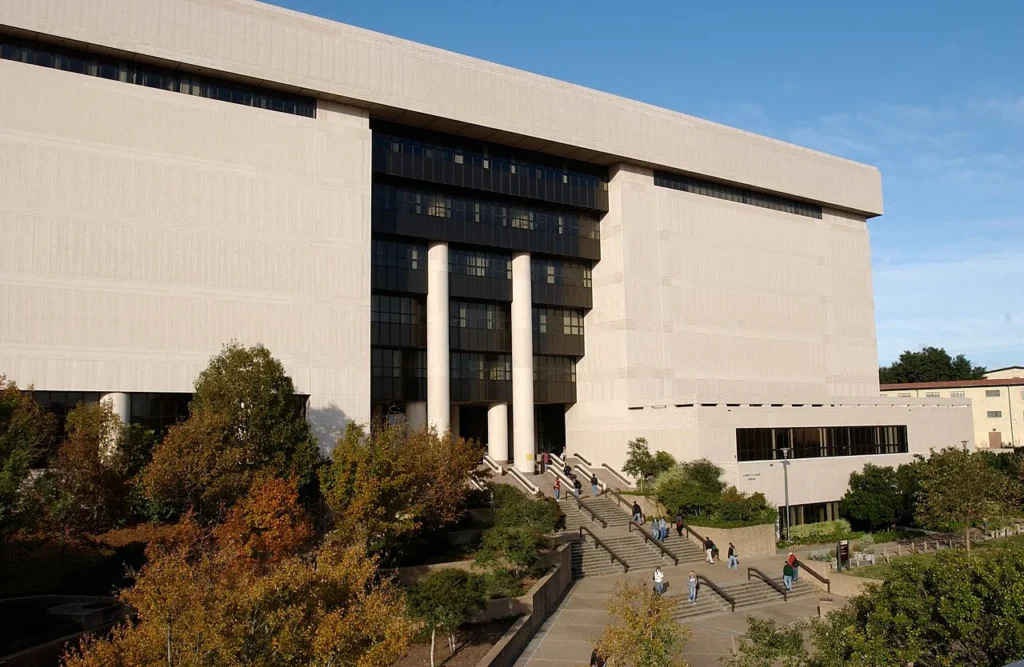
Texas State University’s Professional Counseling graduate program helps students build rewarding careers in schools and mental health agencies. Students gain professional expertise through rigorous academic study combined with hands-on clinical experience.
The program operates from both San Marcos and Round Rock campuses, offering three concentrations accredited by the Council for Accreditation of Counseling and Related Educational Programs (CACREP): Clinical Mental Health Counseling (CMHC), Marriage, Couple and Family Counseling (MCFC), and School Counseling (SC). The program also features a fourth concentration—School Counselor – Texas Certificate—which meets Texas State Board of Educator Certification requirements.
The Professional Counseling program aims to maximize student success in college and beyond by providing responsive and effective support, education, and mental health care. Students receive high-quality mental health and prevention services while contributing to the field’s advancement through their training as emerging professionals.
The school’s strength lies in combining experiential learning with research-based knowledge. Students develop clinical skills through three progressive levels that build expertise via both didactic and experiential activities. The curriculum covers theories, interventions, assessment, and research, while emphasizing diversity, ethics, professional development, and self-awareness.
Students can gain practical experience at two state-of-the-art community counseling clinics serving under-served populations. This hands-on training forms part of one of the most extensive clinical sequences nationwide and concludes with a two-semester external internship.
The Texas State University Counseling Center enhances student wellbeing and resiliency through consultation, crisis response, brief counseling, prevention activities, and educational workshops. Students can access no-cost, on-demand virtual mental health services through the university’s partnership with TimelyCare.
Graduate students pursuing professional psychology training can benefit from several clinical training opportunities at the Counseling Center. The predoctoral internship program at the Counseling Center holds accreditation from the American Psychological Association and maintains membership in the Association of Psychology Postdoctoral and Internship Centers.
Students graduate ready to enter the profession since each concentration fulfills the academic requirements for licensure and certification in Texas.
What counseling programs does Texas State University offer?
Texas State University’s Professional Counseling program has a strong set of graduate-level concentrations that prepare you for counseling careers of all types. Students benefit from a well-laid-out approach to counselor education and a complete curriculum.
The university has four different concentration options in the Master of Arts in Professional Counseling degree. All but one of these concentrations have national accreditation from the Council for Accreditation of Counseling and Related Educational Programs (CACREP):
Clinical Mental Health Counseling (CMHC) – This 60-hour non-thesis program prepares you to become a Licensed Professional Counselor Associate in Texas after graduation. Students interested in research can choose a 66-hour thesis option. You’ll develop skills to counsel in various mental health settings with focus areas in play therapy, counseling adolescents, or counseling adults.
Marriage, Couple, and Family Counseling (MCFC) – Available as both a 60-hour non-thesis and 66-hour thesis program, this concentration meets requirements to get dual licensure as both a Licensed Professional Counselor Associate and Licensed Marriage and Family Therapist Associate. You’ll learn specialized skills in couples counseling and family therapy.
School Counseling (SC) – This 60-hour program helps you earn dual credentials: school counseling certification and Licensed Professional Counselor Associate status in Texas. You’ll learn about K-12 environments and play therapy techniques.
School Counseling Certificate (SCC) – This efficient 48-hour program focuses on meeting Texas State Board of Educator Certification requirements. You’ll get targeted preparation for school counseling careers.
Each concentration builds your clinical skills through three progressive levels—from simple to advanced—with both theoretical instruction and practical application. The program’s core foundation covers counseling theories, clinical interventions, assessment methods, research principles, diversity awareness, and ethical practice.
The program ends with an internship that ties together your education. This hands-on training at counseling sites throughout Central Texas gives you valuable real-life experience under professional supervision.
Internships/Practicum at Texas State University
Texas State University’s counseling programs offer hands-on experience through well-laid-out practicum and internship opportunities. These practical experiences are the foundations of your counseling education and connect theory with real-world application.
Your first intensive supervised counseling experience comes through Clinical Practicum. Faculty members directly supervise you at either the Assessment & Counseling Clinic on the San Marcos campus or the Counseling Practicum Clinic in Round Rock. You need to submit an application 3-4 months before the semester starts. The program reviews your clinical evaluations from previous coursework, checks your degree completion progress, and considers your personal statement about clinical skill development.
The next phase involves Site-Based Internship experiences at counseling locations across Central Texas. You must complete 300 clock hours each semester, with at least 120 direct client counseling hours – about 10-12 clients weekly. A licensed professional (LPC, LMFT, LCSW, or PhD) at your site provides one hour of individual supervision every week.
Psychology students can gain practical experience through several internship and service learning courses in professional settings. These upper-level courses need 120 on-site hours throughout the semester.
The Counseling Center runs a 9-month practicum training program that helps doctoral students develop therapeutic skills with real clients. Practicum counselors work 14 hours weekly and must be available on Fridays. Pre-doctoral psychology interns supervise their work.
Doctoral psychology interns receive a competitive stipend of $36,620 annually with full benefits. The package includes medical insurance, 96 hours each of annual paid personal time and sick leave, plus roughly 15 university holidays. Recent data from 2020-2023 shows graduates landing positions successfully in university counseling centers, independent practices, or medical centers.
These clinical experiences ensure you graduate with both theoretical knowledge and real clinical expertise in your chosen counseling specialty.
What sets Texas State University apart?
Texas State University’s counseling program stands out for its exceptional quality and student success. The program’s CACREP accreditation lines up with most states’ licensure requirements, which gives graduates better job prospects.
Students get more than just the standard curriculum here. The university runs its own Institute for Play Therapy, offering courses that count toward Registered Play Therapist (RPT) certification. This extra training is a great advantage for anyone looking to work with children and teens.
The numbers tell a compelling story about the program’s excellence. The program has achieved a 100% program completion rate and a 100% certification exam pass rate. These results show how well the program prepares skilled professionals to serve different communities.
Money matters are well taken care of too. 75% of TXST students get financial aid, and the university handed out an impressive $213 million in grants and scholarships in fiscal year 2024. The total program costs $36,430 and has an 89% admission rate – good news for budget-conscious students.
The university shines in academic rankings too. Eleven Texas State University programs made it to U.S. News and World Report’s Best Graduate School Rankings for 2025. Faculty members stay active in their field by presenting research at national and international conferences, and they publish books, book chapters, and articles in leading journals.
Students consistently ace state and national exams. Community mental health agencies and schools eagerly hire graduates, which proves the program’s quality and real-life value.
Next steps
Want to join one of the counseling programs at Texas State University? Understanding the application process and important dates will help you plan your journey better.
Students who apply by the priority deadline of January 1 get first consideration for admission, fellowships, scholarships, and graduate assistantships. The standard deadline extends to June 15 if spots remain available after initial reviews. International students should note earlier deadlines: June 1 for fall and October 1 for spring semesters.
Texas State provides over $370 million in financial aid and scholarships each year. Students can apply by submitting the Free Application for Federal Student Aid (FAFSA) with school code 003615. The upcoming academic year’s priority filing date is March 15.
The Counselor Preparation Comprehensive Examination (CPCE) must be passed before you can register for Clinical Practicum. You will have three chances to pass this exam.
Your assigned faculty advisor will meet with you during your first semester to create your course plan covering all 19 required courses.